

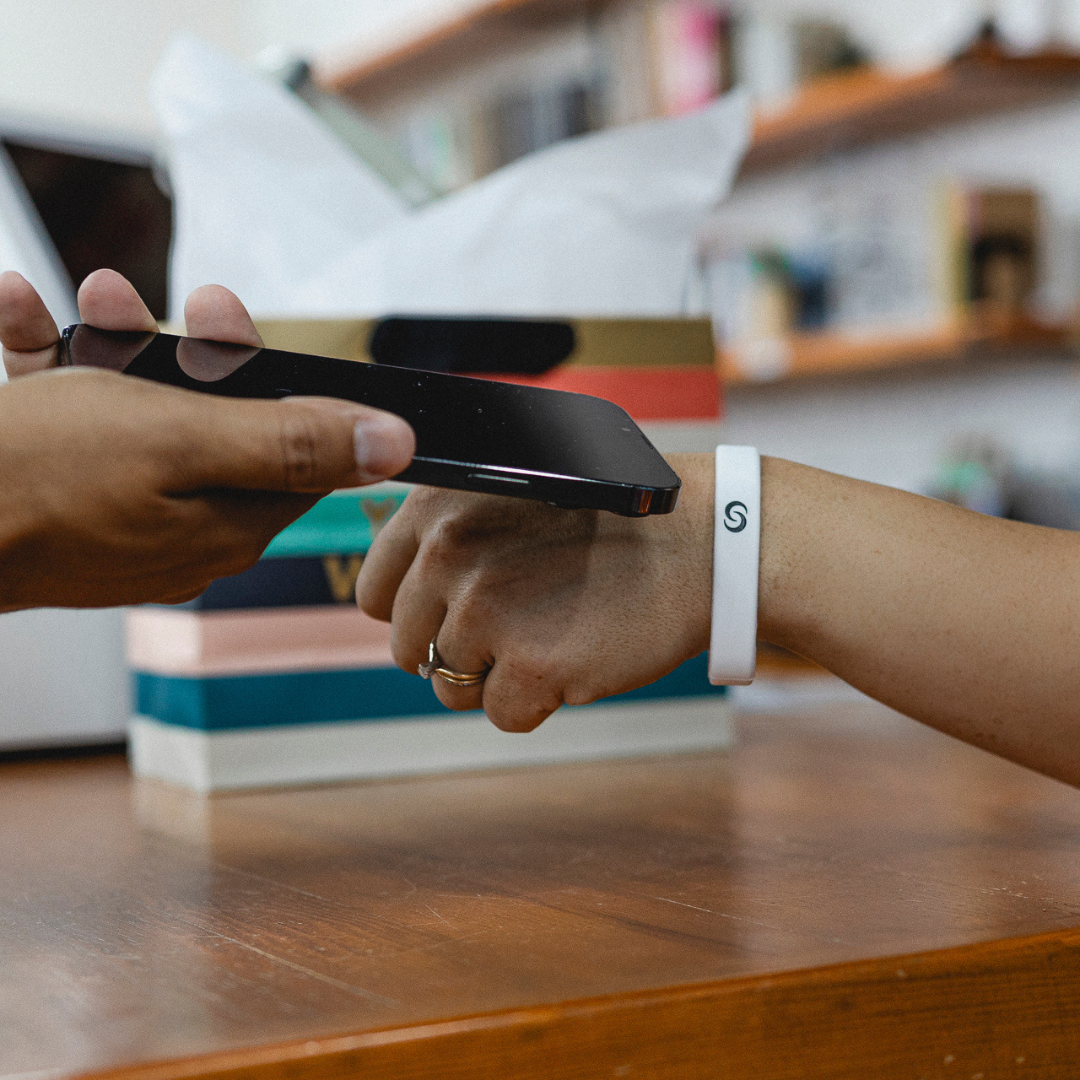
You tap your phone to pay, unlock doors, share contact details, or scan a digital business card, all thanks to NFC tags. Even if you’ve never noticed them, NFC tags power some of the most seamless interactions in your daily life.
Yet most people use NFC without understanding how it works or how they can use NFC tags themselves in business, marketing, automation, or wearable tech.
In this guide, you will learn more about NFC tags, how they work, and the best uses for NFC tags.
Key Takeaways
- NFC tags enable instant, tap-based actions like sharing contact details, opening links, pairing devices, and triggering automations without apps or batteries required.
- They work using short-range wireless communication and activate only when a compatible device is very close.
- There are several types of NFC tags, ranging from simple automation tags to secure, high-capacity options used for payments and access control.
- The best uses for NFC tags include digital business cards, marketing, smart homes, payments, and wearable tech, often outperforming QR codes.
- Modern NFC wearables combine fashion and function, making NFC easier, faster, and more natural to use in daily life.
What Are NFC Tags?
NFC stands for Near Field Communication, and it's a short-range wireless technology. With it, two devices, or a device and a tag, can communicate within close proximity.
An NFC tag is a small, passive microchip paired with an antenna. It can store certain information or instructions, including:
- A URL to a website
- Digital profile
- A payment or access trigger
- An automated command
Unlike Bluetooth or Wi-Fi devices, NFC tags do not need a battery or power source. They work passively and connect with another device as soon as the reader or another device comes within range. Thanks to this, NFC tags:
- Require no charging
- Need no maintenance
- Can last for years
- Are reliable without a charge and an internet connection
This simplicity is what makes NFC tags a powerful tool for everyday interactions.
How Do NFC Tags Work?
NFC works using electromagnetic induction. This means when you bring an NFC-enabled smartphone close to a tag, the phone creates a small electromagnetic field. This field briefly powers the NFC tag, allowing it to transmit the stored information back to your device.
A good example of NFC tags is contactless payment. When you tap your phone, bank card, or smartwatch on a terminal, NFC technology enables the transaction. The NFC chip securely shares payment credentials and approves the payments within seconds without entering a PIN for small amounts.
Here’s what happens step by step:
- You tap your phone near an NFC tag.
- Your phone activates the tag using its electromagnetic field.
- The tag sends its stored data.
- Your phone performs an action (opens a link, saves a contact, triggers a task).
There’s no pairing, no scanning, and no waiting. That’s why NFC feels instant compared to QR codes or Bluetooth.
Types of NFC Tags
NFC technology streamlines payments and data sharing within seconds, but there are actually several types of tags. Each of them is used for different use cases:
Type 1 NFC Tags
Type 1 NFC tags are the most basic and cost-effective. They have a memory capacity of 93 bytes to 2 kilobytes and operate at 106 Kbps. The best uses for NFC tags of Type 1 are simple applications like storing short texts or URLs.
Type 2 NFC Tags
Type 2 NFC tags have a memory capacity of 48 to 144 bytes and the same 106 Kbps speed. The most common use cases for these tags are event ticketing, URL redirects, and low-value transactions. These tags are widely used for business cards and marketing and are suitable for more complex applications.
Type 3 NFC Tags
Type 3 NFC tags come with a bigger memory capacity of 1 to 9 kilobytes and a better speed of 212 and 424 Kbps. As a result, these tags are faster and more suitable for storing data like electronic IDs, membership cards, and electronic wallets.
Type 4 NFC Tags
Type 4 NFC tags are secure, with a large memory capacity of 4 to 32 kilobytes and speeds of 106, 212, or 424 Kbps. Because these tags are more advanced, they are best suited for payments, e-ticketing applications, transportation cards, and other use cases that require the storage of larger datasets.
Type 5 NFC Tags
Type 5 NFC tags are commonly used in inventory management systems, healthcare, and ticketing systems that require secure storage of data. These tags have a memory capacity of 192 to 3584 bytes and a speed of 106 Kbps.
NFC Form Factors
NFC tags come in many physical forms other than physical cards:
- Stickers
- Wristbands
- Rings
- Bracelets
Thanks to this flexibility, NFC tags can be used almost anywhere and for many applications, from packaging to fashion.
What Can NFC Tags Be Used For?
NFC tags are far more versatile than most people realise. Below are the best uses for NFC tags:
1. Digital Business Cards
One of the most popular NFC applications today is digital business cards. Instead of handing out paper cards, professionals embed NFC tags into cards or wearables that instantly share digital profiles, websites, portfolios, and more.
The main advantage of using an NFC-enabled business card is simplicity. There is no need to download an application, scan a QR code, or manually enter data.
The tap works on most modern smartphones and always shares your business profile instantly, making it ideal for networking in crowded events, fairs, and conferences.
2. Customer Engagement & Marketing
NFC tags are increasingly used in customer engagement and marketing, offering a smoother experience than traditional QR codes. By embedding NFC tags into physical spaces or products, brands can guide customers directly to digital content with a simple tap.
Retailers use NFC tags on shelves to share product details, promotions, or reviews, while event organisers use them at booths and exhibitions to collect leads or direct visitors to landing pages.
NFC tags are also effective for loyalty sign-ups, feedback forms, and promotional campaigns, reducing friction at every touchpoint.
3. Smart Home Automation
NFC tags can also be used to simplify everyday smart home routines. By placing tags in strategic locations around the home, homeowners can trigger automated actions with a single tap of their phone.
For example, tapping a tag by the bedside can activate sleep mode, dim the lights, and silence notifications. A tag near a desk can switch on focus mode or start a work playlist, while one near the door can turn lights on or off when entering or leaving.
4. Device Pairing & Security
Because NFC only works at very short distances, it’s ideal for situations where security and reliability matter.
Common examples include smart locks, office access cards, and hotel key cards, where a tap grants authorised access instantly. This close-range communication reduces the risk of interference and makes NFC a trusted technology for secure interactions.
5. Payments
Perhaps the most familiar use of NFC is contactless payments. When you tap your phone, card, or wearable on a payment terminal, NFC technology enables a secure exchange of payment information in seconds.
NFC payments encrypt your payment information and generate a token to protect it and prevent theft. This makes contactless payments fast, safe, and widely accepted across retail, transport, and hospitality.
Benefits of Using NFC Tags
By now, you’re probably convinced that NFC is the technology to embrace across industries. But it offers more benefits than sharing information:
- One-tap simplicity: With NFC, you don’t need to scan codes, open apps, or follow multiple steps to access information. A simple tap is enough to complete the interaction.
- No batteries: Because NFC tags are passive, they require no batteries or charging, making them low-maintenance and reliable over time.
- Rewritable: Most tags are also rewritable and reusable, allowing information to be updated without replacing the tag itself.
- Secure: NFC works only at a very short range, reducing the risk of unwanted access while still delivering fast interactions.
- Works on most modern smartphones: NFC tags are compatible with most modern smartphones, meaning they can be used instantly without special hardware or software.
- Low-cost automation tool: NFC has become a low-cost automation tool for everyday tasks and professional workflows.
- Stylish wearable applications emerging: Stylish NFC wearables blend technology with design and make tap-to-share interactions feel natural rather than technical.
Unlike competitors that focus purely on raw NFC technology, Contact Co. combines fashion and function. We embed NFC into premium wearables and accessories that people actually want to wear and use.

How Contact Co Uses NFC Tags in Smart Wearable Devices
Contact Co applies NFC technology in a way that feels intuitive, stylish, and practical, turning everyday accessories into powerful digital tools.
NFC Rings
NFC rings are stylish accessories that can seamlessly match with any attire.
These rings share contact details, social profiles, or websites instantly with a simple tap on the recipient’s phone.
Contact Co.’s NFC rings are ideal for professionals, founders, and creatives who network frequently and want a fast, memorable way to connect.

NFC Wooden Bracelets
NFC wooden bracelets combine natural materials with modern technology.
This wearable accessory is lightweight and neatly sits on your wrist, performing its function effortlessly.
NFC-powered bracelets offer subtle tap-to-share functionality while maintaining a warm, handcrafted feel.
They’re a popular choice for users who value both design and utility.

NFC Apple Watch Bands
With NFC Apple Watch bands, contact information is always within reach.
A quick tap of the wrist allows users to share their details instantly, making them perfect for meetings, events, and everyday professional interactions where speed matters.
They are compatible with Apple Watches and do not interfere with the smartwatch’s normal functionality.

NFC Metal Cards
NFC metal cards provide a premium alternative to traditional paper business cards.
Built to last and designed to impress, they offer a modern way to share information while reinforcing a strong personal or brand image.
Paired with Contact Co.’s app, you can update your digital profile on the go, track new leads in the built-in CRM, and network with style.

Final Thoughts
NFC tags make sharing information, automating tasks, and enhancing customer experiences faster, easier, and more intuitive. The technology is not only convenient but also secure, making it suitable for a wide range of applications.
From smart business cards to wearable tech and payments, NFC continues to reshape how we interact with the world, quietly powering some of the most seamless digital experiences we use every day.
Ready to try one? Explore Contact Co’s range of stylish NFC wearables and share your professional digital profile with a single tap.
FAQs About NFC Tags
Are NFC tags safe?
Yes, NFC tags work only at very short distances and often use encryption, making them secure for everyday use. Many applications, including payments and access control, rely on NFC’s built-in security features.
How do NFC tags actually work?
NFC tags are powered by your phone’s electromagnetic field when tapped. The tag sends stored data to your device, which then performs an action like opening a link or saving contact details.
Do NFC tags need power?
Not at all. Most NFC tags work passively and require no batteries or charging. They activate only when a compatible device is nearby.
Can NFC tags be reused?
Yes, most NFC tags are rewritable, allowing you to update or change the information stored on them at any time.
Share:
Modern Business Cards For Entrepreneurs
Sustainable Business Cards vs. Traditional Cards: What’s Better?