

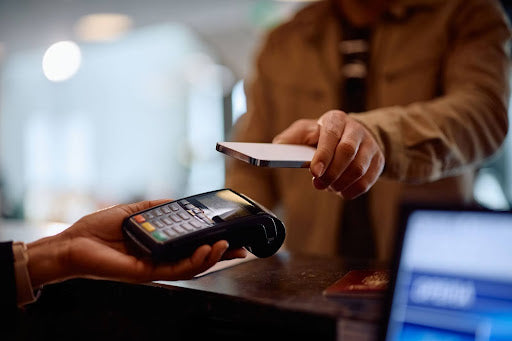
NFC payments have become one of the fastest and most convenient ways to complete a transaction. You tap your smartphone or a smart watch at the checkout and purchase the products without taking out your wallet.
Yet despite how often people use NFC mobile payments, just a handful really understand the mechanics behind this technology, whether it is secure, and how NFC extends beyond checkout terminals.
If you prefer contactless payment, NFC technology is already working behind the scenes every time you tap. In this guide, you will learn more about NFC payments, how they function, and what they can be used for in your business.
Key Takeaways
-
NFC (Near Field Communication) allows devices like smartphones, smartwatches, and cards to securely exchange encrypted payment data within a few centimeters.
-
Each transaction generates a unique, one-time encrypted token, meaning sensitive card details are never shared during the payment process.
-
Unlike traditional contactless cards, NFC payments on phones and watches require Face ID, fingerprint verification, or a passcode, significantly reducing fraud risk.
-
In addition to retail payments, NFC is used for peer-to-peer transfers, events, networking, and sharing payment links or digital profiles.
-
While phones and watches process payments directly, NFC cards and wearables from Contact Co. streamline how creators, freelancers, and entrepreneurs share payment links and digital profiles - without apps, wallets, or QR codes.
What Is an NFC Payment?
For a successful contactless payment, your device must support Near Field Communication (NFC) technology. When in close contact with a checkout terminal or another device, NFC uses short-range radio waves to establish a secure connection.
NFC technology is present in your cards, smartphones, watches, and other wearables that are able to communicate with another device within an inch and a half of the reader or payment terminal, enabling data to be exchanged instantly and securely without physical contact.
For NFC technology to function seamlessly, four key components must work together:
-
Microchip or antenna: Embedded antennas or microchips must be built into contactless cards, smartphones, and wearables. Without it, it won’t be possible to establish a secure connection.
-
NFC payment terminal: The reader used in retail, restaurants, and vending machines should be suitable to exchange data with a device using short-range radio waves.
-
Data encryption: Before any information is transmitted, payment data is encrypted, ensuring sensitive details remain protected from interception or fraud.
-
Power transfer: Your card or a wearable with NFC technology doesn’t need batteries to work because the terminal (or other device) powers it to exchange information.
How Does NFC Payment Work?

NFC payments happen as soon as the connection between the two devices is established, which takes seconds. Despite the speed, there are quite a few steps involved for a successful transaction.
Suppose you are shopping for groceries, and it’s time to pay:
Step 1: Transaction Initiation
The payment process begins when the cashier enters the purchase amount into the checkout system. This action activates the terminal’s NFC functionality and prepares it to receive a contactless payment.
Step 2: NFC Signal Detection
Since the terminal already emits a short-range radio signal, it searches for a nearby NFC-enabled device, which is your card, phone, or wearable. As you tap your device on the terminal, the signal activates the embedded NFC chip.
Step 3: Secure Token Creation
Instead of sharing your real card number, your device generates a unique, single-use encrypted token. This token represents your payment details without exposing sensitive information.
Step 4: Encrypted Data Exchange
The tokenized payment data is transmitted securely through the payment network. Multiple layers of encryption protect the information as it moves between the terminal, card network, and issuing bank.
Step 5: Authorization & Fraud Checks
Your bank and the payment network verify the transaction in real time. They confirm available funds and run automated security checks to ensure the payment appears legitimate.
Step 6: Approval & Confirmation
Once approved, a confirmation message is sent back to the terminal in the form of a visual or audio signal, such as a green light or beep. It lets you know the payment was successful, all within seconds.
How Secure Are NFC Payments?
NFC payments aren’t just convenient, they’re also designed with security at their core. Every tap involved layers of protection, including encrypted data transfer and tokenization.
With NFC technology, whenever you pay with your card, phone, or wearable, your card details are never shared during a transaction. Unlike magnetic strip cards, NFC mobile payments generate a unique and one-time use code for each purchase you make.
Smartphones and wearables add another layer of protection through biometric authentication. Through facial recognition or fingerprint, the systems ensure that only the authorized user can approve a payment.
Considering the widespread adoption of NFC technology, its market is expected to grow from $21.69 billion in 2024 to $30.55 billion by 2029. This growth reflects increasing trust in NFC as a payment method that balances security, convenience, and speed without compromising user safety.
NFC Payments vs. Traditional Contactless Cards
While NFC payments and traditional contactless debit or credit cards may look similar at checkout, they work differently behind the scenes.
|
Feature |
Traditional Contactless Cards |
NFC Payments (Mobile & Wearables) |
|
Device type |
Physical debit or credit card |
Smartphone, smartwatch, ring, or NFC-enabled device |
|
Authentication |
None or PIN after spending limit |
Biometric verification (fingerprint, face ID) or device passcode |
|
Security method |
Static card credentials |
Tokenization with one-time encrypted codes |
|
Data exposure |
Card details tied to the physical card |
Real card numbers are never shared |
|
Control & management |
Limited (card replacement required for changes) |
Fully manageable through mobile wallets |
|
Spending flexibility |
Card-only payments |
Supports wallets, apps, subscriptions, and digital links |
|
Loss protection |
Card must be canceled if lost |
Device can be locked or wiped remotely |
|
Use cases |
In-store payments only |
In-store, online, in-app, and wearable-based payments |
Pros & Cons of NFC Payments
NFC payments offer advantages for both consumers and businesses. However, like any technology, it isn’t flawless. Here is an overview of where NFC payment works well and where its limitations exist:
|
Pros |
Cons |
|
➕ Faster checkout experience ➕ Strong security with encrypted data and tokenization ➕ Improved operational efficiency with fast transactions and reduced cash handling ➕ Supports modern payment preferences |
➖ Initial setup costs for businesses in NFC-compatible POS systems ➖ Not universally preferred, with some consumers favoring cash or traditional cards ➖ Technology dependency as NFC payments rely on device compatibility ➖ Potential misuse if the devices are lost |
NFC Payments Using Different Devices

NFC technology is present in various devices, including smartphones, watches, cards, and more, and used for various reasons: direct payments, sharing information, accessing payment links, and more.
NFC Mobile Payments (Using iPhone and Android)
NFC mobile payments are most commonly made through smartphones using digital wallets such as Apple Pay on iPhone and Google Wallet on Android devices. While the platforms differ, the payment process is largely the same.
On an iPhone, NFC payments are handled through Apple Pay, which securely stores card details and requires Face ID, Touch ID, or a passcode to authorize a transaction.
On Android devices, Google Wallet performs a similar function, using biometric authentication or device security settings.
In both cases, the phone generates a unique, one-time encrypted token for each transaction. The real card number is never shared, and the payment is completed instantly by tapping the phone near a compatible terminal.
NFC Payments via Smartwatches
Many smartwatches support NFC payments and enable hands-free and on-the-go transactions. Popular devices like the Apple Watch and Samsung Watch support tap-to-pay transactions by pressing a single button.
Smartwatch payments work very similarly to mobile payments, where the device communicates with the payment terminal through NFC. The only difference is that the user may need to confirm the transaction by entering a passcode.
NFC Wearables & Business Cards

NFC-enabled rings, bracelets, and business cards that are typically used for networking can also be used to share payment links.
Contact Co. offers stylish wearables and meta business cards for professionals to share a digital profile with potential customers and provide instant access to payment links.
Although this method is different from the traditional NFC payment process, it allows individuals to provide payment links securely.
When you tap a Contact Co. NFC business card against a smartphone, it opens a digital profile that can include payment links. The payment itself happens on the linked platform, not through the NFC device.
Here is how it works in action:
-
Tap the NFC wearable or business card on a smartphone
-
A digital profile opens instantly without any app or QR code required
-
The recipient selects a payment link and completes the transaction online
This approach also offers multiple benefits, including:
-
No QR codes or manual link sharing
-
Ideal for freelancers, consultants, and service-based professionals
-
Perfect for in-person networking, tipping, and on-the-spot payments
-
Always updatable links without reprinting or replacing cards
Best Use Cases for NFC Payments
NFC mobile payments are designed for speed and convenience. Thanks to that, they can be used in a wide range of scenarios:
Events, festivals, and high-traffic venues
Because NFC mobile payments are fast and transactions take seconds to finalize, you will be able to serve several attendees. Vendors benefit from faster turnover, while customers enjoy a smoother checkout experience without handling cash or cards.
Retail, cafes, and everyday purchases
NFC payments have become a go-to option in many cafes, restaurants, and even public transportation. Tapping a phone or wearable is often faster than chip-and-PIN or cash, making it ideal for busy, everyday environments.
Peer-to-peer payments
NFC technology also supports peer-to-peer interactions, whether splitting a bill, reimbursing a friend, or sending money on the spot. Mobile wallets and linked payment apps make transferring funds quick and secure, without needing to exchange bank details.
Comparison Table: NFC Payments vs. NFC Link-Based Payments
While both options use NFC technology, using NFC link-based payments may make more sense in our profession. Upgrading to an NFC wearable or a business card will allow you to share your digital profile, while you can use secure payment links and update them on the go.
|
Feature |
NFC Payments (Phone / Watch) |
NFC Link-Based Payments (Contact Co. Devices) |
|
Processes payments directly |
✅ |
❌ |
|
Opens a payment page |
✅ |
✅ |
|
Requires wallet setup |
✅ (Apple Pay, Google Wallet) |
❌ |
|
Ideal for |
Retail checkout and in-store purchases |
Creators, freelancers, professionals, networking |
|
Biometric security |
✅ (Face ID, fingerprint, passcode) |
Depends on the linked payment provider |
|
Can share a full digital profile |
❌ |
✅ |
Summary
NFC payments are undoubtedly fast, convenient, and secure. While phones and smartwatches handle the actual payment process, NFC cards and wearables from Contact Co. simplify how professionals, creators, and entrepreneurs share payment links, digital profiles, and contact details - all with one device.
Want a faster, more seamless way to share your details and payment links? Explore Contact Co.’s NFC-enabled cards and wearables.
FAQs
Are NFC payments secure?
Yes. NFC payments use encryption and short-range communication, often combined with biometric or passcode authentication.
Can NFC wearables be used for payments?
Some wearables can process payments directly, while others, like Contact Co. devices, open secure payment pages or links.
Is NFC the same as contactless payment?
NFC is the technology behind most contactless payments, but not all NFC interactions involve payments.
Do all phones support NFC payments?
Most modern smartphones do, but availability depends on the device model, region, and wallet support.


Share:
Sustainable Business Cards vs. Traditional Cards: What’s Better?
Best Wearable Tech Devices